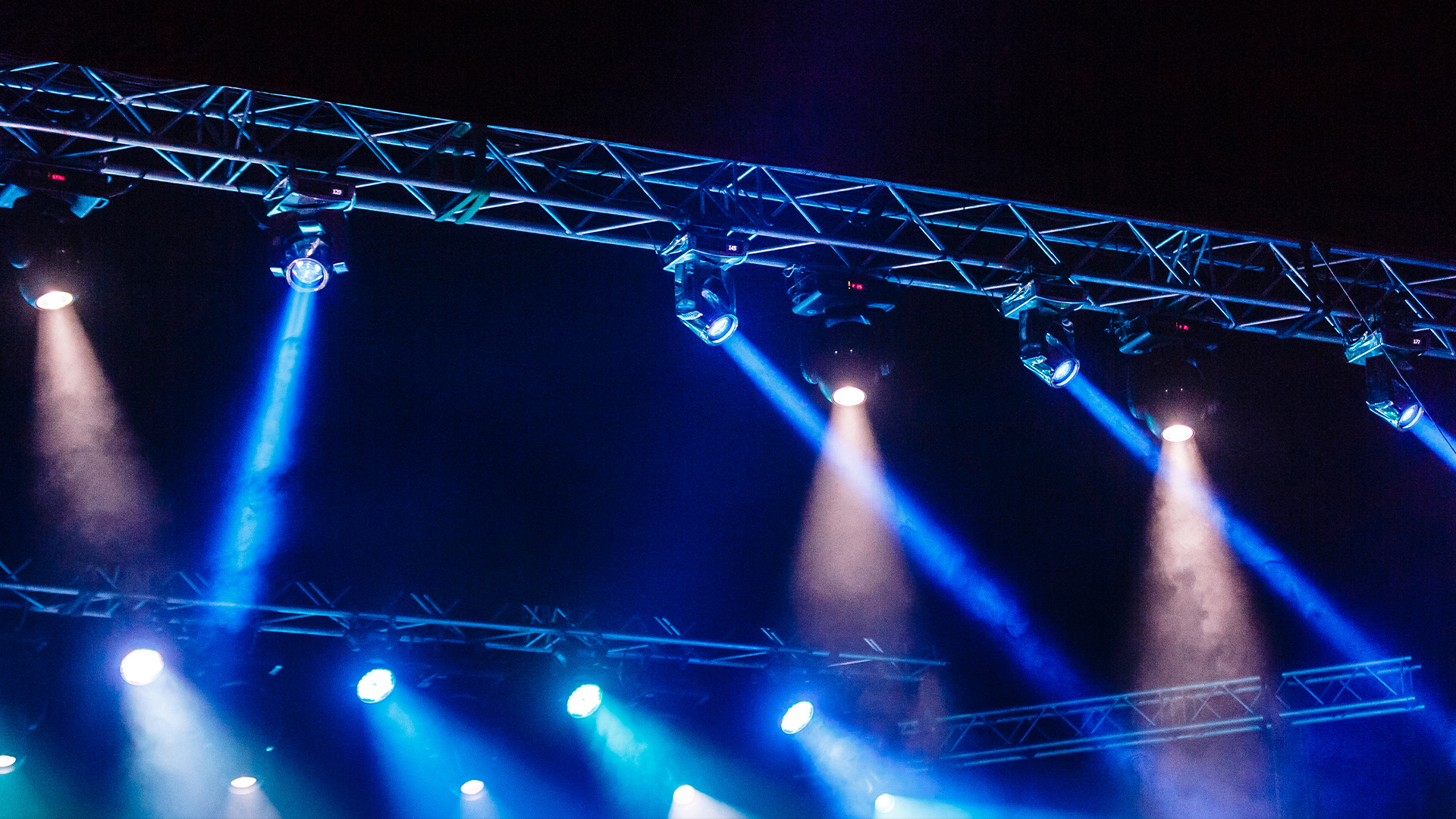
Hotel ballrooms, conference centers, and arena floor events are the most challenging environments in live event videography — not because the production is complex, but because the ceiling is three meters above the performance, the lighting rig is hanging from that ceiling at two and a half meters, and every camera shot is competing with a forest of moving heads, LED bars, and truss structures in its sightlines. Filming under a low ceiling lighting rig without the rig appearing prominently in the camera frame requires strategic collaboration between the camera director, the lighting designer, and the production manager from the earliest stages of production design.
The Sightline Conflict: Understanding the Geometry
When a camera positioned at audience level looks toward a performance on a low stage, the angle of view necessarily intersects with any structure hanging directly above and behind the stage. In venues with 3.5 to 5 meter ceiling heights, this intersection happens for virtually every mid-shot and wide shot regardless of camera position. The geometry is simply unavoidable without specific design interventions. Production designers working these environments must model camera sightlines explicitly in Vectorworks Spotlight or AutoCAD before the rig design is finalized, and make deliberate compromises between lighting coverage and camera clearance.
Fixture Selection for Low-Ceiling Environments
Fixture choice significantly affects the visual impact of a rig on camera. Large-bodied moving heads — the Martin MAC Quantum Wash or the Robe BMFL Wash — have a visual mass in the camera frame that is dramatically more obtrusive than sleeker, smaller profile units. Production designers working low-ceiling environments often specify compact LED wash fixtures like the Robe PAINTE or the Elation Artiste Picasso when camera clearance is critical — sacrificing some output and feature set in exchange for reduced visual obstruction in the camera frame.
Camera Positioning Strategies
The camera director’s most powerful tool in low-ceiling environments is deliberate camera positioning that works with the architectural geometry rather than fighting it. Cameras positioned close to the stage and angled slightly upward have a steeper look angle that puts the ceiling rig above and behind the frame, rather than in it. Elevated camera positions — using scissor lifts, camera risers, or mezzanine balcony placements — look down toward the stage at an angle that similarly clears the hanging rig from the shot. Sony FX9 and Canon EOS C70 cinema cameras with their compact body profiles are increasingly specified for low-ceiling event work because their small size enables positions that larger broadcast cameras cannot access.
Lighting Design Accommodations for Camera
Experienced lighting designers working low-ceiling corporate events with camera coverage develop specific design accommodations: concentrating fixtures in areas of the rig that do not fall in primary camera sightlines, using blackout periods on prominent fixtures during key camera moments, and designing the rig to look intentional and architectural when it does appear in frame — using color and position to make the rig appear as a designed scenic element rather than an obstructive technical necessity. The collaboration between lighting designer and camera director in pre-production is the single most effective tool for managing this challenge.
