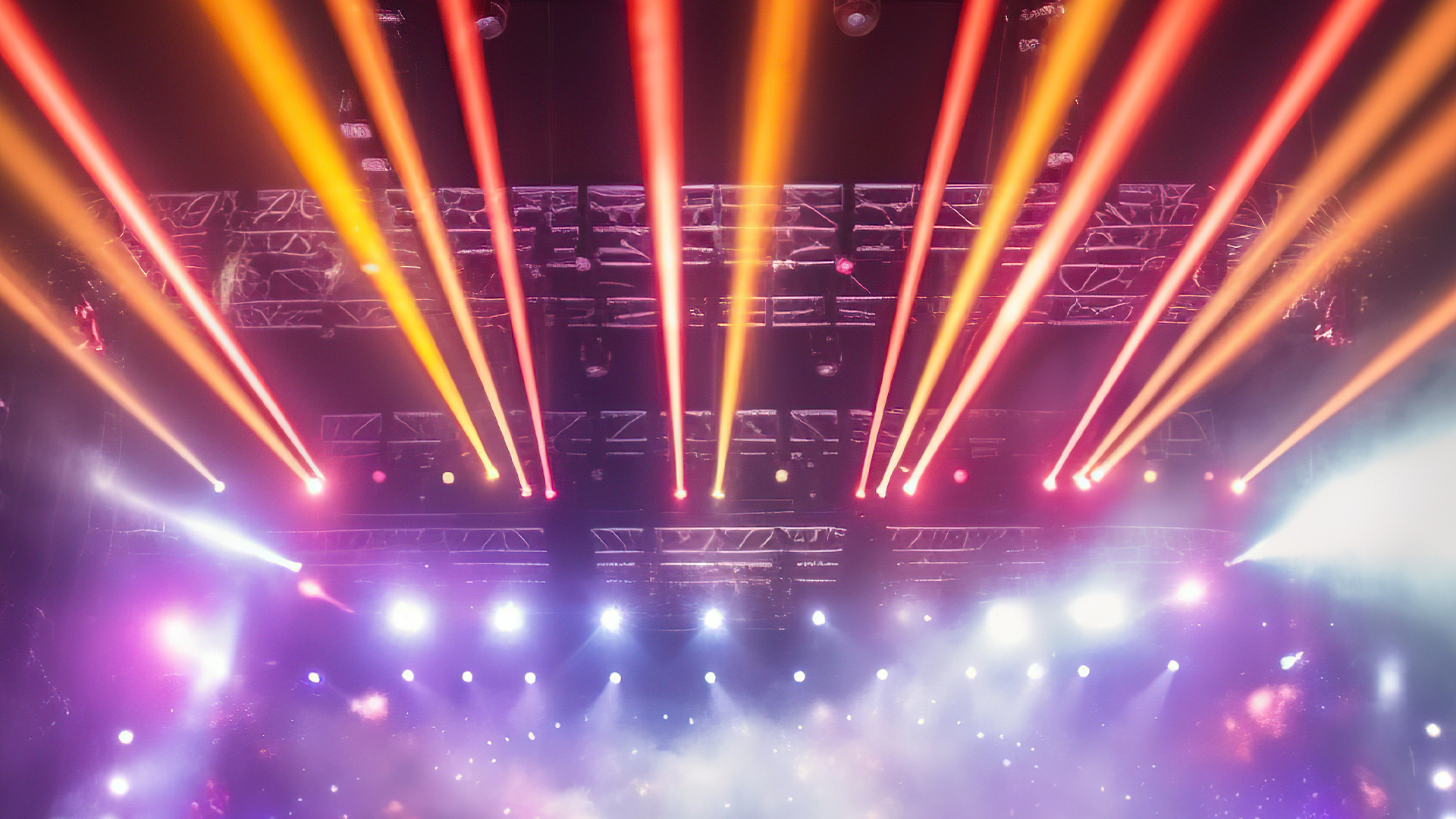
Not all music is the same, and not all PA systems are equally suited to every genre. The acoustic demands of a techno headliner at 10,000 people in a club tent are categorically different from a stadium rock band playing a 70,000-person main stage — different frequency balance, different dynamic range requirements, different SPL targets, different mix topology. What makes JBL’s touring PA systems — specifically the VTX series — genuinely genre-spanning tools is not a compromise between these requirements but rather a system architecture sufficiently flexible to excel in each context when correctly configured.
EDM: Maximum SPL, Maximum Bass, Minimum Latency
Electronic dance music festivals represent the most demanding use case for festival PA systems in terms of peak SPL requirements and low-frequency extension. EDM genres including techno, hard trance, and drum and bass routinely feature kick drum transients at 50-65 Hz with peak levels 10-15 dB above programme average — the classic crest factor challenge that stresses amplifiers and transducers equally. The JBL VTX A12 and A8 combination, powered by Crown I-Tech 12000HD amplifiers, is specified for EDM applications because of the VTX system’s peak power handling — 3,200W continuous programme, 12,800W peak — that handles the instantaneous power demands of kick drum transients without dynamic compression that would rob the music of its physical impact.
At Tomorrowland, Ultra Music Festival, and Electric Daisy Carnival — the three festivals that define global EDM production standards — JBL VTX systems appear on the highest-capacity stages. The sub architecture for these applications invariably features ground-stacked VTX S28 subwoofer clusters in end-fire configuration, optimised to deliver maximum forward SPL from the kick drum’s fundamental frequencies. System engineers at EDM events spend proportionally more time calibrating the sub system than any other PA component — the sub calibration determines whether the physical bass impact that defines the genre’s experiential quality is achieved or merely approximated.
Rock Festivals: Headroom, Dynamics, and Clarity Under Distortion
The acoustic demands of a hard rock festival headliner — Marshall stacks at full output, distorted guitar spectral content across the full audible range, kick and snare transients demanding 20+ dB headroom above programme average — test different aspects of a PA system’s performance from EDM. Distortion in the source material means that the PA system’s own harmonic distortion adds to the audio environment rather than being masked by clean signal. A PA with poor THD (Total Harmonic Distortion) performance at high SPL levels will sound progressively muddier as output increases — particularly at the high-frequency end where guitar harmonics live.
JBL’s Differential Drive transducers — the dual voice coil, dual magnet topology used in VTX main elements — achieve THD below 0.5% at programme levels across the 80Hz-16kHz range covered by the main array, a performance characteristic that translates to maintained high-frequency clarity on distorted rock programme material at levels where competing systems begin to add their own harmonic character to the mix. FOH engineers on rock tours including AC/DC, Iron Maiden, and Foo Fighters have specified JBL VTX systems for this low-distortion character — the ability to push the system to its maximum comfortable operating level without the tonal degradation that characterises lesser PA systems at similar output demands.
Pop: Tonal Accuracy, Immersion, and the Broadcast Interface
Major pop productions present a different set of PA demands: extensive backing track integration, in-ear monitor topology that creates a hybrid acoustic environment between live and reproduced sound, and the constant presence of broadcast feeds that require the PA system to perform within specific parameters determined by the broadcast audio engineer rather than just the FOH mix. Tonal accuracy — the PA’s ability to reproduce the spectral characteristics of the mix without colouration — becomes the primary performance metric when the FOH engineer is working with reference recordings and studio masters as the benchmark for what the live mix should sound like.
JBL’s system calibration methodology — using EASE Focus for prediction, SmaartLive for measurement, and System Architect for parametric correction — enables FOH engineers on pop productions to achieve frequency responses accurate to ±2 dB across the system’s usable bandwidth at any measurement point in the venue. This calibration accuracy is a prerequisite for broadcast interface: when the broadcast audio engineer inserts a direct output from the FOH console into the broadcast chain, the PA system’s tonal character needs to be transparent enough that the broadcast mix and the live mix present a coherent audio experience.
The Cross-Genre System: What VTX Achieves Across All Three
What makes the JBL VTX platform genuinely genre-spanning is not a single technical characteristic but the integration of multiple capabilities that each genre demands. Peak power handling for EDM transients, low distortion for rock clarity, tonal accuracy for pop broadcast interface — these are not conflicting requirements that require compromise. They are capabilities that a properly engineered transducer and amplification system can deliver simultaneously. JBL’s engineering investment in the VTX platform — driven by the requirement to serve all three genre contexts at the world’s highest-profile festivals — has produced a system that sets the audio standard across the full spectrum of live music production. For the production companies and engineering teams specifying systems for the festivals where EDM, rock, and pop share the same calendar weekend, that genre versatility is not a convenience. It is the operational prerequisite for doing the job.
