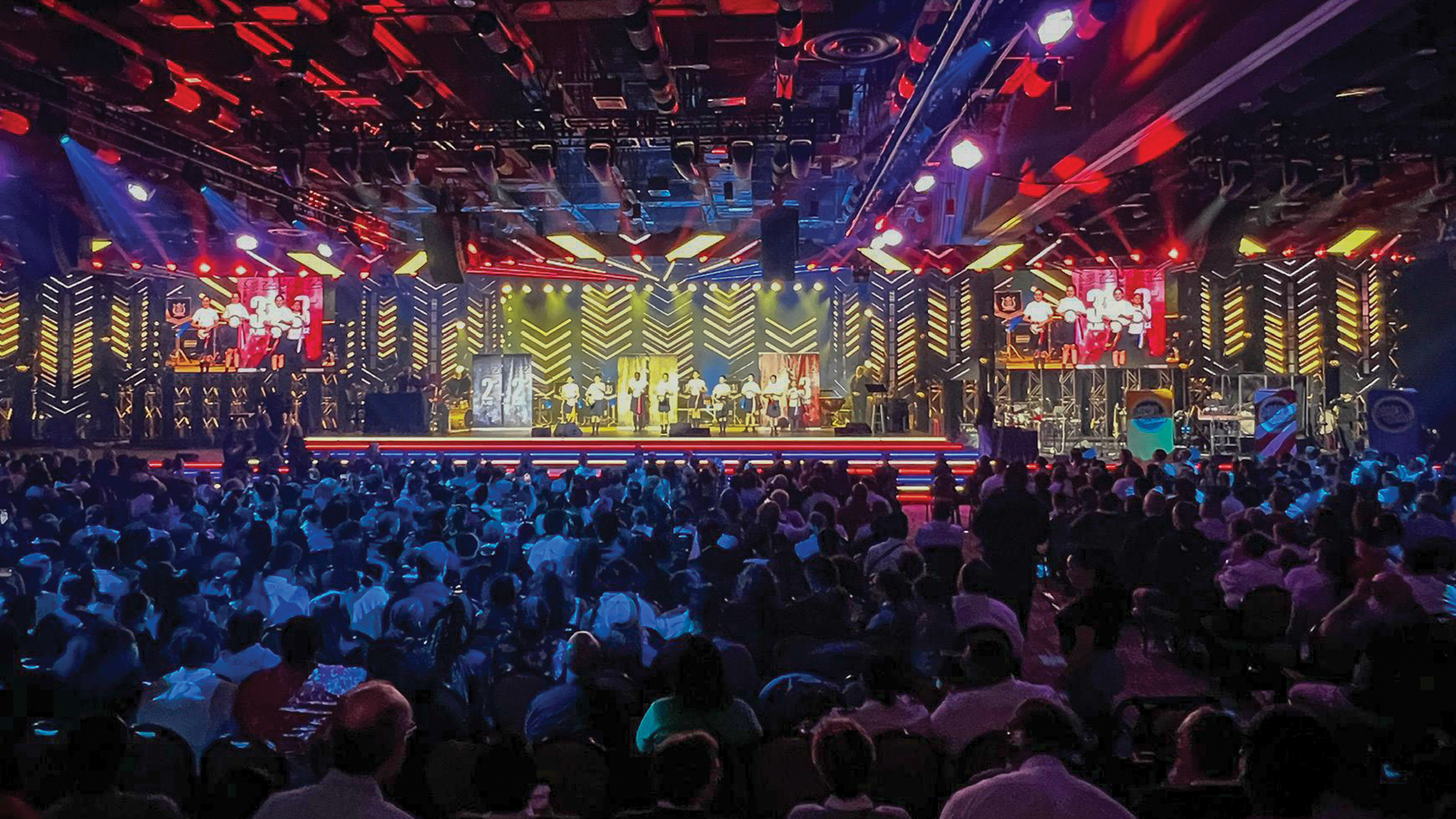
The rooftop venue in downtown Chicago had views of Lake Michigan that the client had paid a significant premium to access. What the event proposal did not mention — what the sales team may genuinely not have known — was that the only access to the rooftop was a service elevator with a 2,000-pound weight capacity and a door opening 42 inches wide. The production manager discovered this during the site survey six weeks before the event. The speaker array specified for the show would not fit through the elevator door. The ground-support truss needed disassembly to 48-inch sections to pass through. The line array had to be substituted with a column array system that could be transported in sections and assembled on the roof. This is load-in without dock access, and it is far more common than clients — or sometimes, sales teams — realize.
The Site Survey as Load-In Intelligence Gathering
The site survey is the production manager’s primary intelligence-gathering exercise, and for no-dock-access venues, it is non-negotiable. A remote survey based on venue floor plans, photos, and a phone call with the venue coordinator is insufficient. The physical walk-through reveals things that documents never capture: the height of the service elevator interior, the weight rating of freight lifts, the turning radius of corridors, the load-bearing capacity of stairways, and the presence of obstacles like decorative tile floors that cannot support the weight of a loaded pallet jack.
The information gathered during a thorough site survey feeds directly into equipment specification. If the elevator height is 7 feet, the maximum assembled height of any piece of equipment entering the building is 6 feet 10 inches. If the corridor to the event space has a 90-degree turn with a 6-foot radius, the maximum length of any single piece of equipment is determined by that turn geometry. These constraints drive the production design, not the other way around.
Equipment Specification for Constrained Access Venues
The equipment specification for a no-dock-access venue begins with a measurement discipline that most productions reserve for rigging. Every piece of equipment that must enter the building needs its physical dimensions documented: length, width, height in transit configuration, and weight. This information is then mapped against the access constraints identified in the site survey.
Audio systems for constrained access typically shift from large-format line arrays to column arrays (like the L-Acoustics X Series or d&b audiotechnik xC Series) or point source systems that transport in smaller, lighter cases. Video systems move from large-format LED panels — which can weigh 25 to 40 pounds per cabinet — to compact modular displays or consumer-grade display panels where the resolution and brightness tradeoff is acceptable for the venue size. Lighting systems shift from heavy moving fixtures that require high-point rigging to floor-based uplights, Martin ERA 150-style architectural fixtures, and battery-powered units that require no cable runs.
The Carry Plan: Logistics Without a Dock
A carry plan is the formal operational document that maps the movement of every equipment piece from the truck to the venue space, identifying the access route, the transport method for each item (hand-carry, dolly, freight elevator, scissor lift), the number of crew members required, and the sequence in which equipment moves. Without a carry plan, a no-dock-access load-in defaults to controlled chaos — crew improvising the sequence and discovering physical conflicts in real time.
The carry plan includes time estimates for each equipment move. A freight elevator that serves the entire building — with call demand from hotel guests, kitchen staff, and the production crew simultaneously — will not be exclusively available. The carry plan should include a conservative estimate of elevator wait time and factor it into the total load-in timeline. Productions that plan a no-dock-access load-in without accounting for elevator contention routinely run 90 minutes to two hours over schedule.
Crew Sizing for No-Dock Load-Ins
No-dock-access load-ins require more labor than equivalent productions in venues with dock access. The labor call should be sized based on the carry plan, not on the equipment list alone. A production with 8,000 pounds of gear to move through a 42-inch-wide service elevator may need 20 crew members for a four-hour load-in, where the same production into a venue with dock access and a loading bay would require 12 crew for two hours.
The crew skill mix also shifts. Loading dock operations allow forklifts and pallet jacks to do the heavy lifting, with crew guiding and securing loads. Hand-carry operations require physically capable crew members who can manage production cases safely through tight corridors, up stairs, and in confined elevator spaces. IATSE local labor jurisdictions in major markets typically provide crew experienced with hotel and non-traditional venue load-ins. Requesting crew with this specific experience during the labor call — rather than general stagehand labor — significantly improves the no-dock-access load-in experience.
Managing the Building: Communication With Venue Operations
A no-dock-access load-in requires close coordination with the venue’s operations team from the moment the production contract is signed. The production manager needs confirmed answers to specific questions: who controls access to the service elevator, what are the hours of elevator availability, are there building restrictions on the hours during which production equipment can be moved through public areas, and is there a building operations contact available on site during the load-in?
In hotels, the director of engineering and the banquet operations manager are the critical relationships. The director of engineering controls the physical infrastructure — elevators, freight lifts, loading ramps. The banquet operations manager controls the event space timeline and has authority to resolve conflicts when the production crew’s needs clash with the hotel’s other operational requirements.
The Contingency That Covers Everything
Every no-dock-access load-in plan needs a contingency for the equipment that cannot enter the building through the planned route. A crane lift — hoisting equipment from the street level directly to a rooftop or upper-floor window — is an expensive but sometimes the only solution for large-format equipment in constrained access venues. Crane availability, permitting, street access, and rigging attachment points on the building need to be researched and priced during pre-production, not discovered as a last-resort option during load-in.
Productions that have done a no-dock-access load-in without a contingency plan have stood in lobbies with equipment that could not enter the building, making phone calls to rental vendors to arrange substitute gear while the client’s event clock was running. The contingency is not an admission that the plan will fail — it is the insurance that ensures the show happens regardless.
