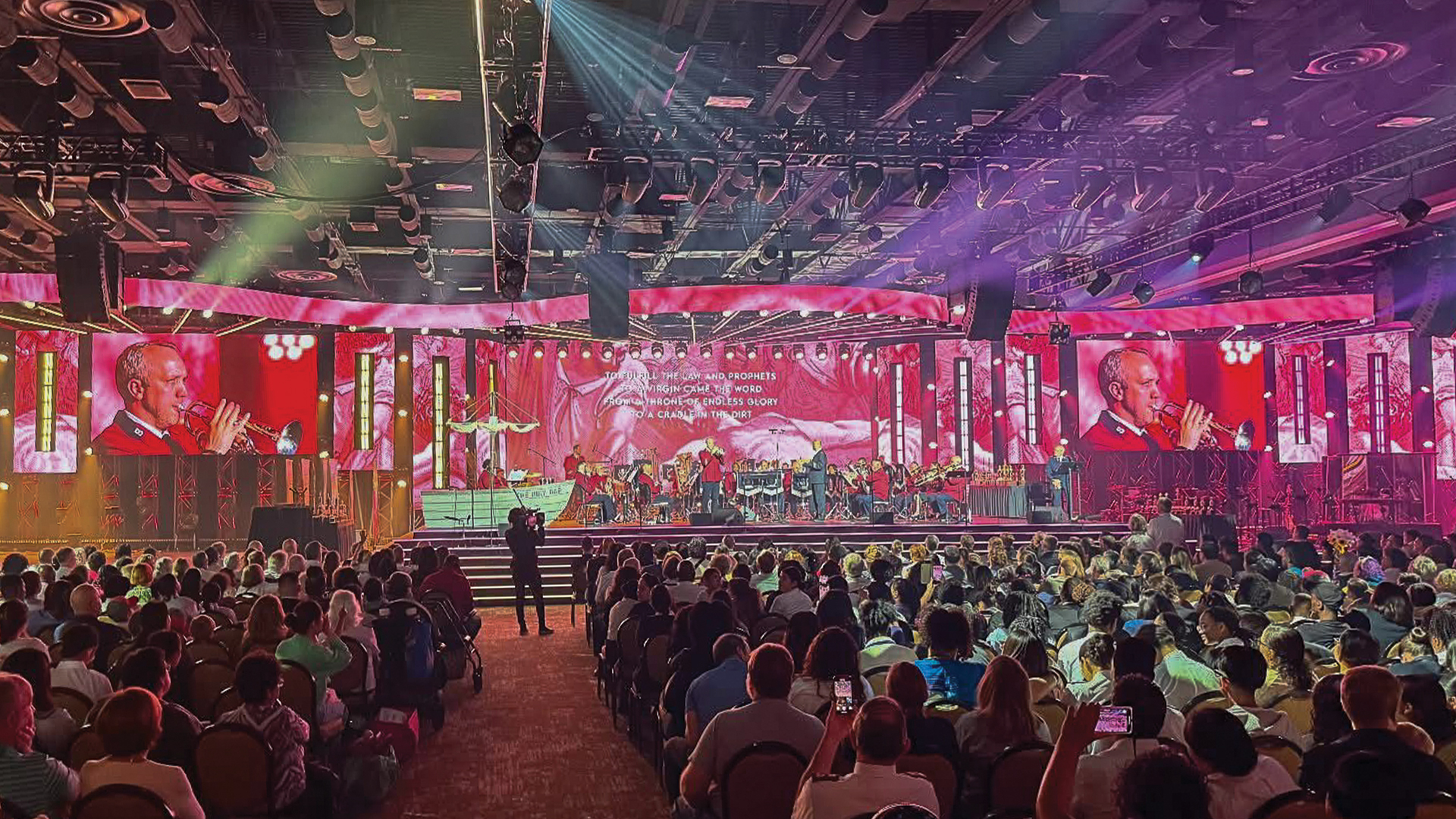
The LED video wall was supposed to be the centerpiece of the entire production. Twelve million pixels of ROE Visual Black Pearl panels, carefully calibrated, fed by twin Brompton Tessera SX40 processors, displaying content that the creative director had spent eight months developing. Instead, it spent opening night cowering behind black masking drapes while the production team performed emergency surgery on the signal chain. Welcome to the glamorous world of large-format video production.
The Pixel Promise and the Reality Check
LED technology has transformed stage design over the past two decades. What began with chunky modules suitable only for outdoor sports venues has evolved into fine-pitch displays capable of broadcast-quality imagery from viewing distances measured in feet rather than yards. The pixel pitch wars of the 2010s drove manufacturers like Absen, Unilumin, and Leyard to create panels with sub-millimeter LED spacing, enabling applications that projection could never match.
But capability and reliability aren’t synonyms. Every video engineer who has worked major productions carries memories of LED walls that refused to cooperate at crucial moments. The technology is magnificent when it works; the failure modes are spectacular when it doesn’t.
The Corporate Conference Catastrophe
A Fortune 500 company booked a major convention center for their annual leadership summit. The production budget was substantial—think private jet substantial—and the creative team specified a curved LED backdrop that would wrap 180 degrees around the presentation stage. The panels arrived three days early, were assembled by a veteran LED tech crew, and tested successfully during setup.
Then came the morning of the event. The Novastar MCTRL4K controller powering the wall displayed error messages that existed in no documentation anyone could locate. The receiving cards in approximately forty percent of the panels stopped communicating with the controller entirely. Random rectangular sections of the wall displayed content while others showed solid colors or nothing at all.
Debugging Under Executive Pressure
The CEO was scheduled to speak in four hours. The video director made a decision that would become industry legend: rather than continue troubleshooting a system that might or might not be recoverable, she ordered the crew to mask the entire wall with black drapes and pivot to a backup plan that hadn’t existed twenty minutes earlier.
While the drapes went up, another crew was dispatched to source projectors from every rental house within driving distance. By the time the CEO took the stage, four Panasonic PT-RZ31K laser projectors were rear-projecting onto a hastily-erected screen that replaced the LED wall’s position. The content played perfectly. The audience never knew that twelve million dollars of LED technology sat unused behind black curtains.
Understanding LED Wall Architecture
The complexity of modern LED video systems explains both their capability and their fragility. A typical installation involves multiple layers: the media server generating content (often a disguise gx 2c or Resolume Arena setup), the processing layer converting that signal to LED-specific formats, distribution systems carrying data to individual panels, and the panels themselves with their onboard electronics.
Failure can occur at any point in this chain. The media server might output a signal the processor doesn’t recognize. The fiber optic cables carrying data to distant panels might have developed micro-fractures during transit. Receiving cards can fail from heat, static, or manufacturing defects. Power supplies in panels can degrade. The permutations of possible problems are essentially infinite.
The Museum Installation That Played Hide and Seek
Permanent installations present different challenges than temporary event builds. A major museum commissioned a fine-pitch LED display for a featured exhibition—2.5mm pitch Samsung The Wall modules creating an immersive video environment. The installation went smoothly. The content looked spectacular. Then, approximately six weeks into the exhibition run, panels started developing “character.”
Individual modules would occasionally display incorrect colors, always in the same positions, always for unpredictable durations. The color calibration that had been perfect at installation drifted as LEDs aged at slightly different rates. Some panels ran hotter than others due to airflow patterns in the gallery space, accelerating their degradation.
The Heat Equation Nobody Calculated
LED panels generate substantial heat, and that heat must go somewhere. The museum’s HVAC system had been designed for visitor comfort, not for the continuous thermal load of a large video wall installation. During peak visiting hours, the gallery temperature would rise slightly, pushing the LED panels toward their thermal limits. Processing chips would throttle. Signal timing would drift. Panels would drop offline to protect themselves.
The solution required supplemental cooling specifically for the video wall—essentially an air conditioning system for the display alone. This retrofit cost more than the original HVAC budget for the entire gallery space, but it stabilized the installation. The lesson spread through the AV integration community: LED wall thermal management must be specified during design, not discovered during troubleshooting.
Concert Tours and the Traveling Video Puzzle
Touring productions add another variable: repeated assembly and disassembly. A major arena tour in 2022 used a complex LED stage design with panels from ROE Visual Carbon series arranged in non-rectangular configurations. Each night, local crews assembled the same wall in a different venue. Each night, different panels would misbehave.
The production eventually developed a panel lottery system. Before each show, the video crew would power up the wall and identify which specific panels were having issues. Those panels would be swapped with spares, and the show would proceed. The defective panels traveled to the next city in a special “quarantine” case, to be examined by technicians during the following day’s setup.
Connector Culture and the Art of Making Contact
Many LED wall failures trace to connection points rather than panel electronics. The data cables linking panels carry high-frequency signals sensitive to impedance mismatches. Power connections must deliver clean voltage under varying loads. The physical locks holding panels together determine whether electrical contacts remain secure during the vibrations of a concert environment.
Experienced video technicians develop almost ritualistic approaches to connector maintenance. Contact cleaner applied to every data port. Power cable ends inspected for corrosion. Panel latches checked and rechecked. These habits seem obsessive until you’ve watched a show stop because a single dirty connector corrupted data flow across half a wall.
The Broadcast That Almost Wasn’t
Live television amplifies LED wall stakes exponentially. A network awards show specified an enormous curved LED video surface as the primary scenic element. The Brompton processing was calibrated for camera with input from the director of photography. Everything tested perfectly during camera blocking.
During the live broadcast, approximately ninety seconds before a major musical performance, a section of the wall went dark. The technical director cut to an alternative camera angle while the LED crew scrambled. The problem: a genlock signal from the broadcast truck had shifted timing slightly, and the LED processors interpreted this as an instruction to blank their outputs. Manually overriding the genlock setting restored the wall, but those ninety seconds of crisis aged the video director approximately five years.
Building Redundancy Into Video Systems
Contemporary high-stakes productions increasingly specify full signal redundancy for LED walls. This means duplicate media servers, duplicate processors, duplicate distribution paths, and automatic failover switching. The investment is substantial—sometimes doubling the video budget—but the insurance it provides against catastrophic failure justifies the cost for mission-critical events.
The disguise media server platform includes features specifically designed for this scenario, allowing multiple servers to share workload and take over seamlessly if one fails. Brompton Tessera processors support similar redundancy configurations. These tools exist because manufacturers understand that LED walls in professional applications cannot simply be “turned off and on again” during a live event.
Lessons From Behind the Black Curtain
The LED video industry continues maturing, with each failure contributing to collective knowledge. Manufacturers improve designs based on field reports. Integration companies develop better testing protocols. Production teams learn which questions to ask during specification and which warning signs to watch during installation.
Yet the fundamental tension persists: LED walls deliver visual impact impossible to achieve any other way, but they remain complex systems with complex failure modes. The curtain behind which that corporate LED wall hid represents the ultimate backup plan—acknowledgment that sometimes the best technology in the world simply won’t cooperate, and the show must go on regardless.
For every video engineer reading this, the message is clear: always have a backup plan. Know where the curtains are stored. Maintain relationships with every projector rental house within reasonable distance. And never, ever promise a client that the LED wall is “bulletproof.” Nothing in live production is bulletproof. The only guarantee is that eventually, something will go wrong—and your job is to ensure the audience never knows.
Keywords: LED video wall, ROE Visual Black Pearl, Brompton Tessera SX40, large-format video production, stage design, pixel pitch, Absen, Unilumin, Leyard, video engineer, LED backdrop, LED tech crew, Novastar MCTRL4K, receiving cards, Panasonic PT-RZ31K, LED video systems, media server, disguise gx 2c, Resolume Arena, fiber optic cables, fine-pitch LED display, Samsung The Wall, color calibration, video wall installation, AV integration, ROE Visual Carbon, panel lottery system, LED wall failures, data cables, video technicians, curved LED video surface, Brompton processing, director of photography, genlock signal, full signal redundancy, disguise media server platform, LED video industry
