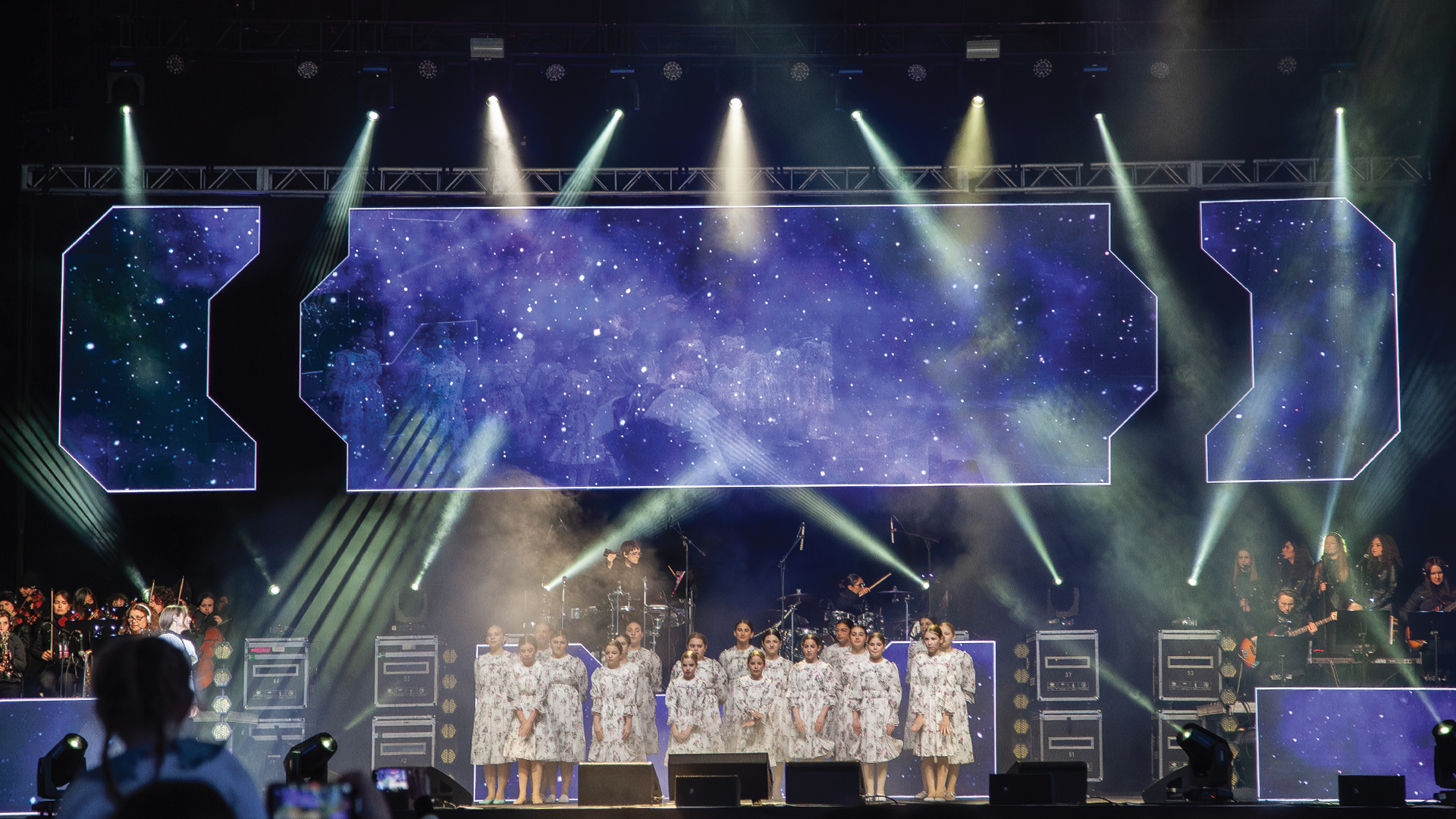
The LED video wall has transformed live entertainment into a canvas of unlimited visual possibility. Millions of diodes working in concert create images that dwarf projection capabilities while surviving stage lighting conditions that would wash out traditional screens. When these walls glitch, however, something remarkable occasionally happens—the malfunction becomes more compelling than the programmed content.
The Digital Artifact as Art
ROE Visual and Absen panels dominate touring productions with pixel pitches fine enough to create broadcast-quality imagery at viewing distances measured in meters rather than football fields. These panels process video signals through receiving cards that translate video processor output into the specific voltages that illuminate individual diodes. When that translation fails—even momentarily—the results can range from subtle shimmer to spectacular visual chaos.
The history of digital art includes extensive exploration of glitch aesthetics. Artists like Rosa Menkman and Nick Briz have built careers around the deliberate corruption of digital signals to create works that reveal technology’s hidden textures. When touring LED walls accidentally reproduce these effects, audiences experience unintended art that sometimes surpasses the planned content in visual impact.
Signal Chain Serendipity
The signal path from media server to LED panel involves multiple conversion stages where creative accidents can occur. Disguise and Brompton Technology processors handle scaling, color management, and signal distribution with precision that prevents most visible artifacts. But touring equipment endures conditions that stress every component, and connections that worked perfectly yesterday might introduce errors today.
A loose fiber optic connection between processor and panel creates visual stuttering that resembles intentional strobe effects. A data cable running too close to high-power amplifier lines picks up electromagnetic interference that manifests as colored bands sweeping across the image. These technical failures occasionally synchronize with musical content in ways that seem deliberately designed.
The Receiving Card Rebellion
Each LED panel contains receiving cards that interpret incoming data and drive specific pixel regions. When these cards malfunction, they might display the wrong image section, freeze on a previous frame, or generate entirely random pixel values. A wall built from sixty panels might have fifty-nine displaying perfect content while one creates abstract expressionist commentary in the corner.
The NovaStar MCTRL4K and similar video processors include diagnostic systems that identify failing panels before they become visible problems. Experienced LED technicians learn to watch diagnostic displays during soundcheck, identifying potential issues while replacement time remains available. The show must go on, but professional teams prefer shows where equipment cooperates.
Temperature and Timing
LED panels generate substantial heat during operation—thousands of watts converted into illumination and thermal radiation. BlackMagic panels and similar high-brightness units include cooling systems that maintain operating temperatures within safe ranges. When ambient conditions or ventilation problems allow temperatures to climb, pixel response times change, creating motion artifacts that blur fast-moving content.
The summer festival circuit tests these thermal limits regularly. Video engineers deploy panels in direct sunlight that raises operating temperatures toward protection thresholds. Some panels include automatic dimming that reduces heat generation at the cost of visible brightness. The afternoon artist might perform against a slightly dimmer wall than the headliner who takes the stage after sunset allows equipment to recover.
The Refresh Rate Dance
Professional touring LED panels operate at refresh rates designed to prevent visible flicker during camera capture. The ROE Carbon series and similar broadcast-grade panels maintain refresh rates above 3840Hz, ensuring clean footage regardless of camera shutter speed. When these refresh rates interact with specific content frame rates, however, interference patterns can emerge that cameras miss but live audiences perceive.
Content running at 29.97fps on panels designed for 60Hz input creates conversion artifacts that sophisticated scaling processors handle gracefully most of the time. The Brompton Tessera SX40 processor includes frame blending algorithms that smooth these conversions. Occasionally, specific image content—particularly motion graphics with fine detail—defeats these algorithms and creates visual stuttering that looks like dramatic emphasis on certain beats.
Moiré Magic
The moiré patterns that occur when camera sensors interact with LED pixel structures usually qualify as technical problems requiring careful lens selection and camera positioning. But these interference patterns create psychedelic visual effects that some productions have learned to exploit intentionally. The glitch becomes a feature rather than a bug.
Certain content specifically designed for IMAG capture avoids fine patterns that trigger moiré. Other content embraces these patterns, creating visual experiences that only exist in the intersection between panel pixels and camera sensors. The live audience sees one thing while the broadcast shows another—both valid interpretations of the same moment.
Historic Glitches and Cultural Impact
The 2009 MTV Video Music Awards featured an LED wall malfunction during a performance that became memorable partly because of the technical failure. The wall’s unexpected behavior created visual chaos that matched the musical energy more effectively than the planned content. Video directors increasingly design content that mimics these accidental aesthetics, recognizing that audiences have developed appreciation for digital imperfection.
Contemporary music video production frequently includes deliberate glitch effects created through After Effects plugins and Notch real-time graphics. These synthetic glitches attempt to capture the compelling randomness of genuine equipment failures without the risk that actual malfunctions introduce. The original accidental aesthetics have become an intentional design language.
Embracing Controlled Chaos
Some forward-thinking content designers build systems that generate controlled randomness—programmed unpredictability that captures glitch aesthetics without risking genuine equipment failure. TouchDesigner networks can create visual feedback loops that produce infinitely varying patterns, turning the LED video wall into a generative canvas rather than a playback surface.
This approach represents philosophical acceptance that perfect reproduction of planned content might not always serve the production best. The glitched panel that creates unexpected visual drama offers a reminder that live entertainment thrives on the unpredictable. When millions of pixels occasionally decide to interpret their instructions creatively, they contribute to the irreproducible magic that distinguishes live performance from recorded media.
The panels that glitch for dramatic effect aren’t failing—they’re improvising. And sometimes, their improvisations improve the show.
