Introduction
Fireside chats and panel discussions have become a staple of conferences, corporate events, and thought leadership sessions. While the content and speakers are central, the backdrop plays a critical role in setting the tone, reinforcing branding, and engaging the audience. Creative backdrops combine LED walls, scenic elements, lighting, and motion graphics to make sessions visually compelling without distracting from the speakers.
The Evolution of Panel Backdrops
Historically, fireside chats relied on simple curtains, printed banners, or static stage sets. As AV technology advanced, event designers began using LED walls, projection mapping, and modular scenic elements to create immersive environments. Today, backdrops can be interactive, branded, and dynamic, elevating the perception of both the speakers and the sponsoring organization. Companies like ROE Visual, Absen, and Unilumin provide high-resolution LED solutions suitable for mid-sized panel stages, while Robe, Martin, and ETC lighting enhances ambiance.
LED Wall Backdrops
LED walls are a versatile choice for panel discussions. They allow for dynamic content such as logos, subtle motion graphics, or thematic visuals that reinforce the topic. For fireside chats, designers often use:
-
Soft ambient visuals that set a welcoming tone.
-
Subtle gradients or abstract motion graphics that create depth without distraction.
-
Branded patterns or sponsor content for corporate events.
Choosing the right pixel pitch is essential—P2–P4 panels work well for close viewing in intimate rooms, while P3–P6 suits larger ballrooms. AV teams should also consider viewing angles, brightness, and color calibration to ensure clarity for all attendees.
Scenic Elements and Physical Backdrops
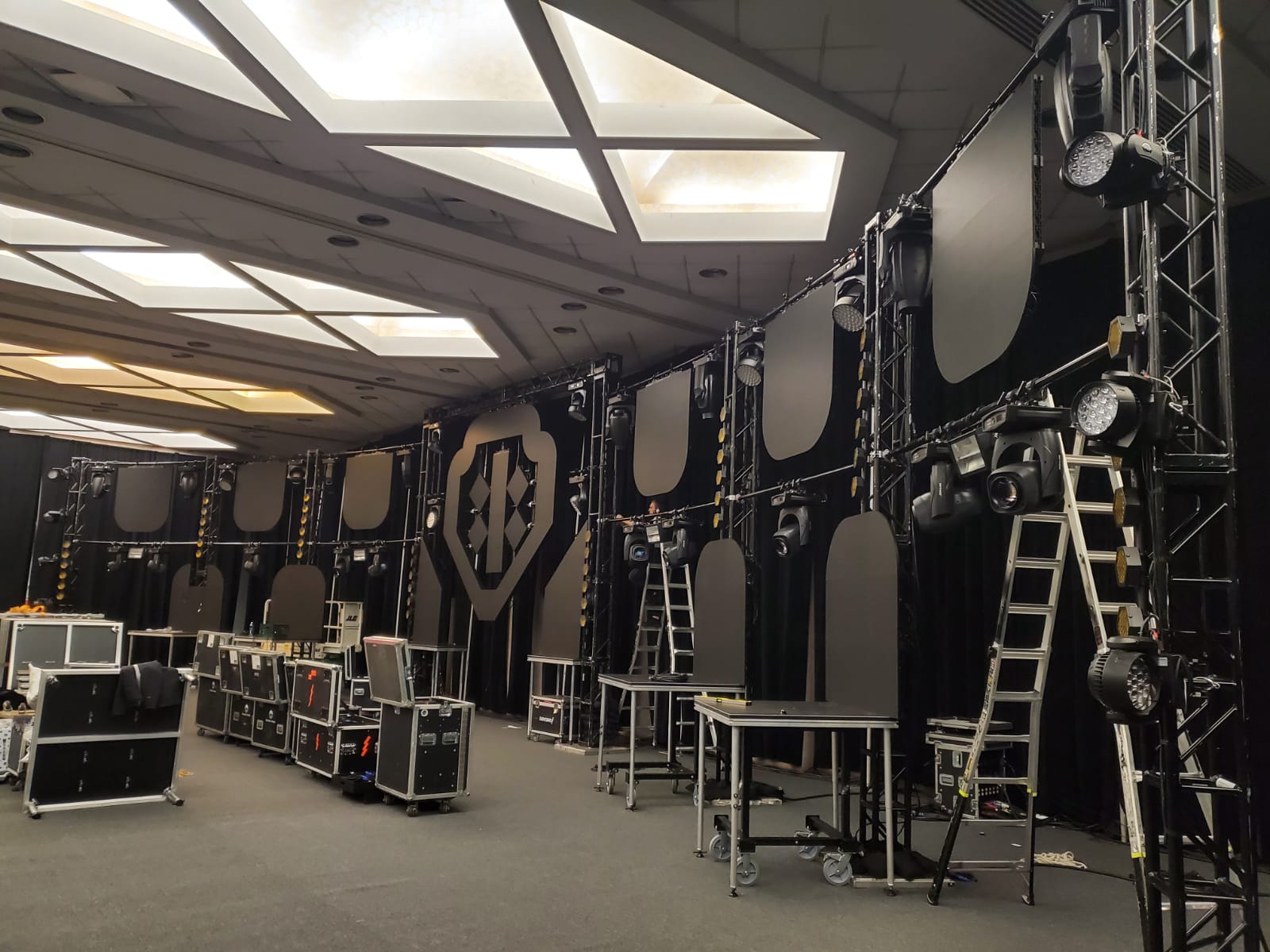
In addition to LED walls, scenic elements like modular panels, textured surfaces, or architectural features add dimension. Examples include:
-
Wooden slats or lattice panels for a warm, intimate feel.
-
Curved or geometric modular structures that create visual depth.
-
Branded banners or printed graphics integrated seamlessly with LED content.
Physical backdrops help define the stage space, highlight speakers, and provide a consistent visual identity, particularly when combined with well-planned scenic lighting.
Lighting Design and Color Washes
Lighting is crucial for creating mood and focus during fireside chats. Scenic light washes from brands like Robe, Martin, and Clay Paky can illuminate the stage evenly while emphasizing the backdrop. Tips for effective lighting:
-
Use warm tones for relaxed, conversational sessions.
-
Incorporate dynamic color shifts subtly to indicate transitions or topic changes.
-
Combine front and side lighting to reduce shadows on speakers.
Programmable lighting consoles such as grandMA3, ChamSys MQ, or ETC Eos allow precise control, ensuring the backdrop complements rather than competes with the discussion.
Integrating Motion Graphics
Motion graphics enhance the storytelling aspect of fireside chats. Subtle animations, animated logos, or thematic visuals can reinforce key points without stealing focus. Software like Notch, TouchDesigner, or Adobe After Effects enables designers to create synchronized visuals that react to cues from audio, lighting, or presenter movement. For example, animated charts or word clouds can appear in real time as speakers reference key data points.
Hybrid and Virtual Event Considerations
In hybrid sessions, backdrops must be optimized for both in-person and virtual audiences. High-quality LED walls with calibrated color and contrast ensure that streaming cameras capture the backdrop accurately. Additional considerations include:
-
Avoiding overly bright visuals that create hotspots on camera.
-
Ensuring motion graphics remain readable on smaller screens.
-
Coordinating lighting so both live and virtual attendees experience consistent ambiance.
Interactive Backdrops
Some panel discussions now use interactive backdrops to increase engagement. Examples include:
-
Touch-sensitive LED panels that respond to gestures or audience input.
-
Projection mapping on physical scenic elements to create motion or transform the environment dynamically.
-
Live social media feeds integrated into the backdrop to highlight audience questions or comments.
These interactive elements can make the session more engaging and memorable while providing sponsors or organizers with data on audience participation.
Case Studies: Successful Backdrop Designs
-
TEDx Talks often use subtle motion graphics and soft lighting to keep the focus on speakers while creating a visually appealing stage.
-
Salesforce Dreamforce panels combine LED walls with geometric scenic elements, branded graphics, and synchronized lighting for immersive experiences.
-
Google Cloud conferences utilize interactive backdrops with motion graphics that respond to live data, enhancing audience understanding of technical topics.
These examples illustrate that well-designed backdrops elevate both aesthetic quality and engagement, supporting the speakers rather than overshadowing them.
Practical Tips for AV Teams
-
Match LED wall resolution and pixel pitch to room size and audience distance.
-
Combine physical scenic elements with digital visuals for depth and interest.
-
Use warm, controlled lighting to focus on speakers and complement the backdrop.
-
Test motion graphics on both live stage and camera feeds for hybrid events.
-
Coordinate audio, lighting, and visual cues to create seamless transitions.
-
Previsualize complex setups in Vectorworks Spotlight or AutoCAD to ensure proper placement and sightlines.
Future Trends in Backdrop Design
The future of fireside chat backdrops includes:
-
AI-generated motion graphics that adapt in real time to speaker cues or audience engagement.
-
Augmented reality overlays for hybrid or virtual sessions, extending visual depth beyond the physical stage.
-
Modular and transportable scenic elements for quick setup across multiple events.
-
Sustainable materials for physical backdrops, combining aesthetic quality with environmental responsibility.
These trends point toward more adaptive, interactive, and immersive backdrops that enhance the audience experience while aligning with brand messaging.
Conclusion
Creative backdrops for fireside chats and panel discussions play a critical role in setting tone, enhancing engagement, and reinforcing branding. By combining LED walls, scenic elements, lighting, and motion graphics, AV professionals can craft visually compelling stages that support speakers and captivate audiences. Whether for in-person, hybrid, or virtual sessions, thoughtful backdrop design ensures every panel discussion feels polished, professional, and memorable.
